


On the outskirts of Warrington, beside the Manchester Ship Canal, an unlikely conservation success story has been taking shape.
Woolston Eyes was once used to hold millions of tonnes of material dredged from the canal. Over time, these former industrial lagoons developed into valuable wetland habitat and are now home to one of Britain’s rarest breeding waterbirds.
The black-necked grebe (Podiceps nigricollis) is a small and distinctive bird. During the breeding season, adults develop chestnut-coloured flanks, red eyes and golden feathers around the head. The species is fairly widespread in parts of Europe, but remains a very rare breeder in Britain.
That makes its recent success at Woolston Eyes especially important.
In 2023, only four pairs bred in a newly restored part of the reserve. By 2025, the site was supporting 35 breeding pairs, representing almost two-thirds of Britain’s population.
This increase followed several years of habitat work by the Woolston Eyes Conservation Group and the RSPB.
Some parts of the reserve had become too overgrown for the grebes, so conservationists removed vegetation, reshaped areas of the site and created new shallow pools, reedbeds and nesting islands.
The aim was not simply to create space for one species. The work focused on improving the wetland as a whole.
Black-necked grebes often nest close to black-headed gulls, which can offer some protection by fending off potential predators. The new nesting islands helped to encourage gull colonies, while the shallow pools created better feeding habitat for the grebes and other waterbirds.
As well as the growing population of black-necked grebes, Woolston Eyes supports large numbers of ducks and other wetland birds. Marsh harriers, grasshopper warblers and willow tits can also be spotted around the reserve.
What makes the story particularly interesting is that Woolston Eyes is not a remote or untouched landscape. It is a site shaped by industry and surrounded by roads, towns and other forms of urbanisation. Yet with the right management, it has become an important refuge for wildlife.
Britain has lost much of its historic wetland habitat through drainage, urban development and changes in land use. Protecting the wetlands that remain is vital, but places such as Woolston Eyes also show what can be achieved by restoring damaged or overlooked land.
Old industrial sites, quarries, reservoirs and other man-made landscapes can all have value for wildlife if they are managed carefully.
The recovery of the black-necked grebe at Woolston Eyes is a small success in the wider picture of British conservation, but it is an encouraging one.
It shows that even heavily altered landscapes can support wildlife again when they are given the chance.
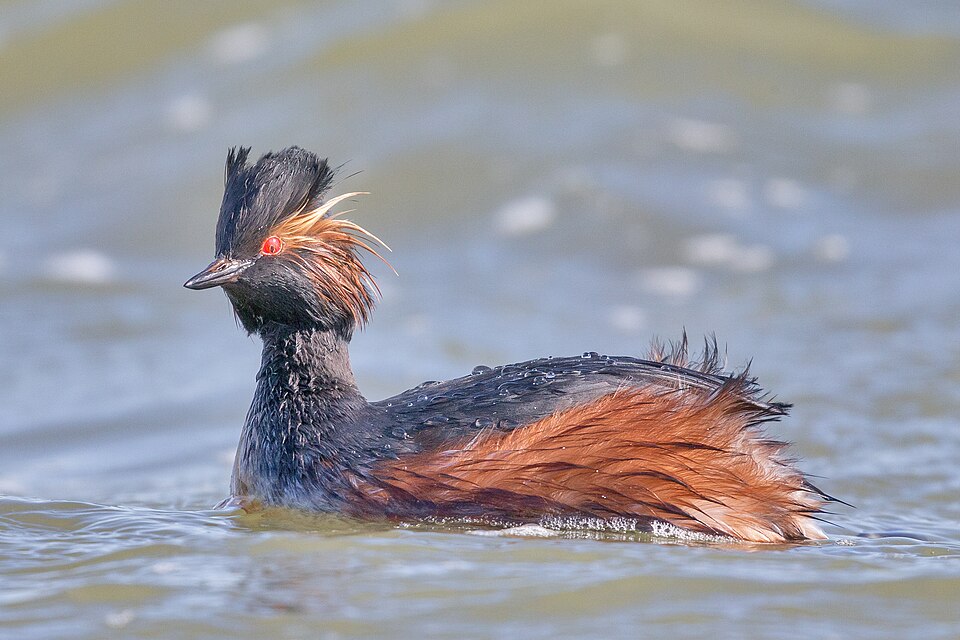
An adult Black-necked Grebe Andreas Trepte