


There are still corners of Britain where the woods feel thick with time. Not ancient in the way of ruins, but in the way the air hangs: wet, close, almost held in place. You notice it first in the quiet. Then in the moss. These are fragments of Britain’s temperate rainforest, and in a few places, they are beginning to edge back.
Often called Atlantic or Celtic rainforests, they once ran in a broken band along the west: Cornwall, Wales, Cumbria, up into Scotland. High rainfall and steady temperatures made them ideal for lichens and mosses. Trees did not stand alone here; they carried whole communities on their bark. Today, around one percent of this habitat remains across Britain, scattered and often thinned to the point of being easy to miss.
Recent work by organisations including the Woodland Trust and Plantlife has mapped what survives and, more importantly, where recovery could take hold. The conditions are still present across much of the western coast. These forests did not disappear primarily because the climate shifted. They were worn down over time by grazing, pollution, and the steady replacement of native woodland.
At places like Wistman’s Wood on Dartmoor, the older pattern persists. Low, twisted oaks rise out of moss-covered boulders, their branches thick with lichen. It is not a large place. You can cross it quickly. But it holds something that has endured.
Efforts to restore these systems are now underway in parts of Devon, Cumbria and western Scotland. The work is not complex. Grazing pressure is reduced. In some areas, fencing is introduced. Then the process slows. Saplings establish where they can. Lichens return gradually, if the air allows it. It takes time.
As one Plantlife briefing put it, restoration is often less about intervention than restraint: allowing woodland to recover once the pressure is lifted. A woodland manager involved in work in Cumbria described it more plainly: “It has to work for the people on the ground. Otherwise it doesn’t last.”
These forests matter in ways that are easy to overlook. A single woodland can support hundreds of lichen species, some of them rare on a global scale. The vegetation holds water, steadies soil, and softens local conditions. None of this is dramatic in isolation. Taken together, it becomes significant.
There are limits. Much of the land best suited to recovery is still used for grazing or timber. Reducing grazing is not a simple decision where livelihoods are concerned. Government-backed environmental schemes are beginning to support lower-intensity land use, but uptake varies, and outcomes depend on local conditions as much as policy.
There is also the question of scale. Small fragments help, but they are not enough on their own. For temperate rainforest to function properly, it needs continuity – connected ground rather than isolated pockets.
It is slow work. Slower than most funding cycles.
What is happening now is not a dramatic return, but a gradual shift. Pressure eases in one place, and something begins to move. Moss spreads across stone. Young trees take hold where they can. The structure thickens, almost without being noticed.
In a country where so much has been managed down to the edge, that kind of change carries weight. Not because it is large, but because it is real.
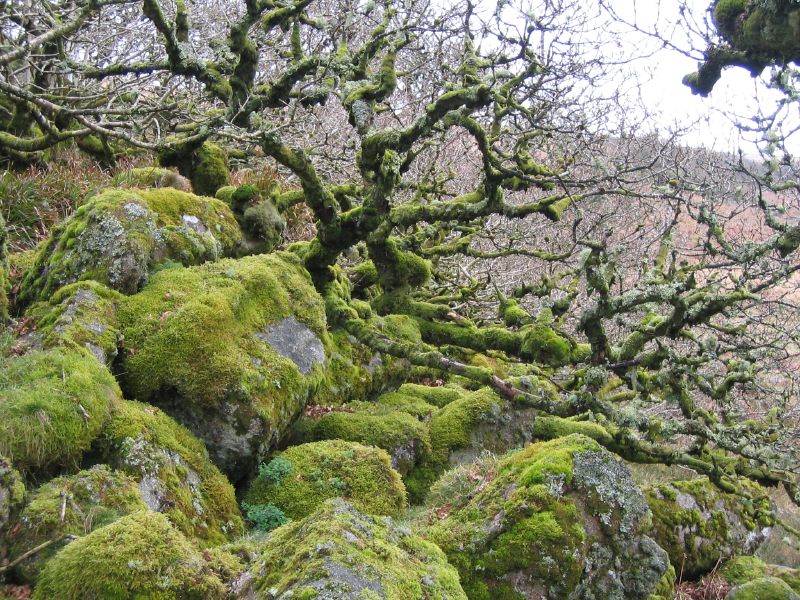
Wistman`s Wood. Dartmoor
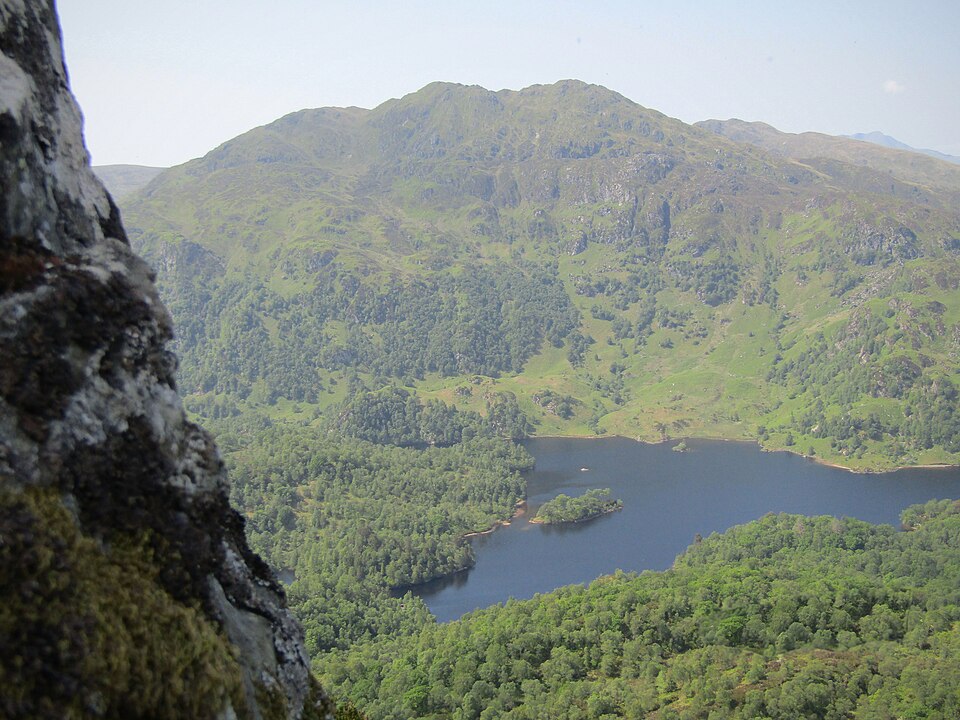
Trossachs Wood. Loch Katrine. Scotland
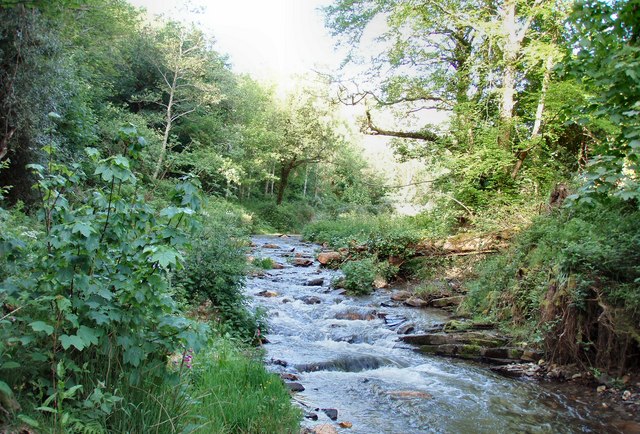
Valency Valley, Cornwall