


After decades of careful restoration, one of Britain’s rarest and most fragile wildflowers has made a quiet return. The delicate fen orchid (Liparis loeselii), once feared to be on the verge of extinction, has been officially reclassified from “Endangered” to “Near Threatened” in the newly published Great British Red List of Vascular Plants marking a rare recovery story in modern British botany.
The shift follows years of carefully coordinated and planned conservation efforts led by Plantlife, the Cambridge University Botanic Garden, and regional Wildlife Trusts. Through an approach of re-wetting drained fens, restoring open dune slacks, and reintroducing certain plants, these conservationists have helped pull the species back from the brink.
Historically found across lowland Britain, it declined catastrophically through the twentieth century as wetlands were drained for agriculture and dune habitats deteriorated. By around 2010, the orchid was identified at just four sites in the entire country: three in East Anglia and one in Kenfig, south Wales, with barely a thousand individual plants remaining.
Since then, long-term management and reintroduction work have transformed its prospects. The plant now grows at ten sites, seven in England and three in Wales, with more than 10,000 individuals recorded. According to Plantlife, this represents “a rare success story for British flora”, evidence that well-resourced, targeted conservation can reverse even the most desperate declines.
Researchers from the UK Centre for Ecology & Hydrology and the Botanical Society of Britain and Ireland, which produced the updated Red List, have praised the outcome as a model for species recovery. Dr Pete Stroh of the Botanical Society noted that although the overall report paints a bleak picture (26% of native plants now classed as threatened), the fen orchid shows what persistence can achieve. “It’s a glimmer of hope,” he said, “proof that partnership work over decades really can change the story.”
Yet experts are quick to warn that the species’ survival is not guaranteed. The fen orchid remains “conservation-dependent,” meaning its habitat must be continuously managed to stay viable. It thrives only under specific conditions: damp, alkaline soils with patches of bare ground and scattered moss or sedge cover. If water levels drop or vegetation becomes too dense, the orchids can vanish.
Tim Pankhurst, a former conservation manager with Plantlife, called the project “a moment of genuine hope, but one that depends entirely on ongoing effort.” He credited the revival to years of collaboration among local landowners, volunteers, and scientific institutions. “It took patience and partnership to bring this orchid back,” he said. “Now we have to keep going, because nature doesn’t stand still.”
The fen orchid’s return stands out against a backdrop of continued decline across Britain’s wild plants. Many species are still losing ground as climate pressures, pollution, and land-use change reshape the landscape. But the orchid’s fragile green petals, glowing once again in the wetlands of England and Wales, offer something increasingly rare: a sign that recovery, though hard-won, is still possible in the UK.
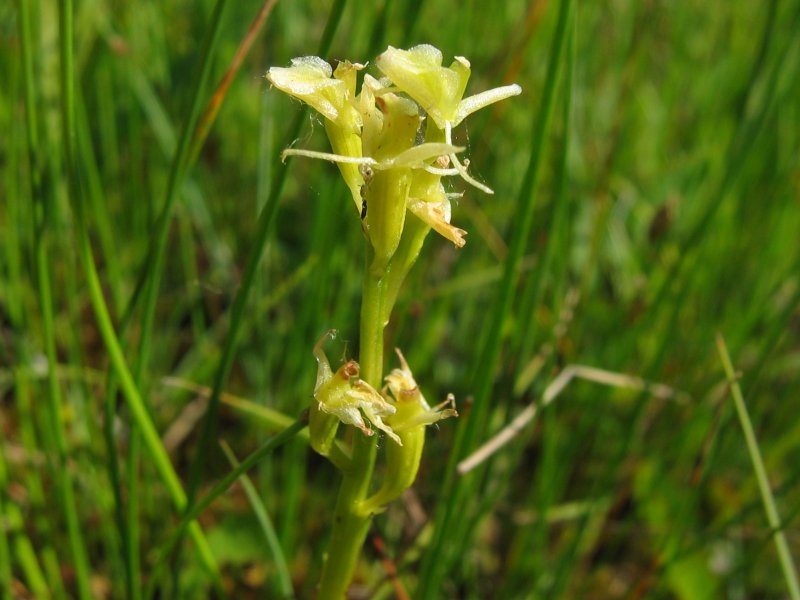
Liparis loeselii