


The heath fritillary (Melitaea athalia), one of Britain’s rarest and most threatened butterflies, is making a striking recovery on Exmoor’s Holnicote Estate, with more than 1,000 individuals recorded this spring. This a significant increase from the 600 recorded the previous year.
Once close to national extinction, the butterfly’s revival is the result of focused conservation efforts by the National Trust and Butterfly Conservation, aimed at restoring its preferred habitats through traditional land management techniques.
The heath fritillary depends on warm, open woodland clearings where common cow-wheat, its primary caterpillar food source, grows in abundance. Historically, the species thrived in areas shaped by rotational coppicing and grazing, practices that declined over the past century, causing severe habitat loss and population collapse.
At Holnicote, conservation teams reintroduced Devon red cattle to manage vegetation, cleared encroaching bracken and bramble, and brought back coppicing methods. These efforts have paid off: the butterfly has returned to three previously vacant sites, and numbers at another location rose from just four individuals last year to 186.
“We’ve been working to bring back the landscape the heath fritillary depends on. It’s a brilliant result and shows the value of long-term conservation planning.” Said Chris Luffingham of the National Trust.
The species emerged earlier than usual this year, likely due to a warm and dry spring; a development that may have helped boost the count. However, conservationists are cautious. Sudden cold snaps or prolonged rain during the breeding period could have a major impact.
“This success is encouraging, but there’s still a lot of uncertainty,” said Dr Caroline Bulman of Butterfly Conservation. “The species is incredibly sensitive to changes in the environment. We need to keep managing habitats carefully and monitor how the population responds over time.”
The work on Exmoor is already drawing attention from conservationists working elsewhere. Similar methods of restoring grazed and coppiced woodland with a focus on specialist food plants could support other declining butterfly species and pollinators in fragmented landscapes.
This positive story stands out against a backdrop of wider concern for UK wildlife. Recent studies have warned that more than 500 bird species could vanish globally in the next century due to climate change and habitat loss. In England, water abstraction has reached record levels, and debates continue over a proposed Planning and Infrastructure Bill that some fear could weaken local environmental protections.
In contrast, the heath fritillary’s recovery offers a tangible example of how conservation can work when it’s grounded in local knowledge and carried out over time.
Habitat work at Holnicote will continue throughout the summer, with plans to strengthen habitat links across the region. The hope is to establish a more stable network of sites where the butterfly can thrive, not just in Exmoor, but in other parts of south-west England.
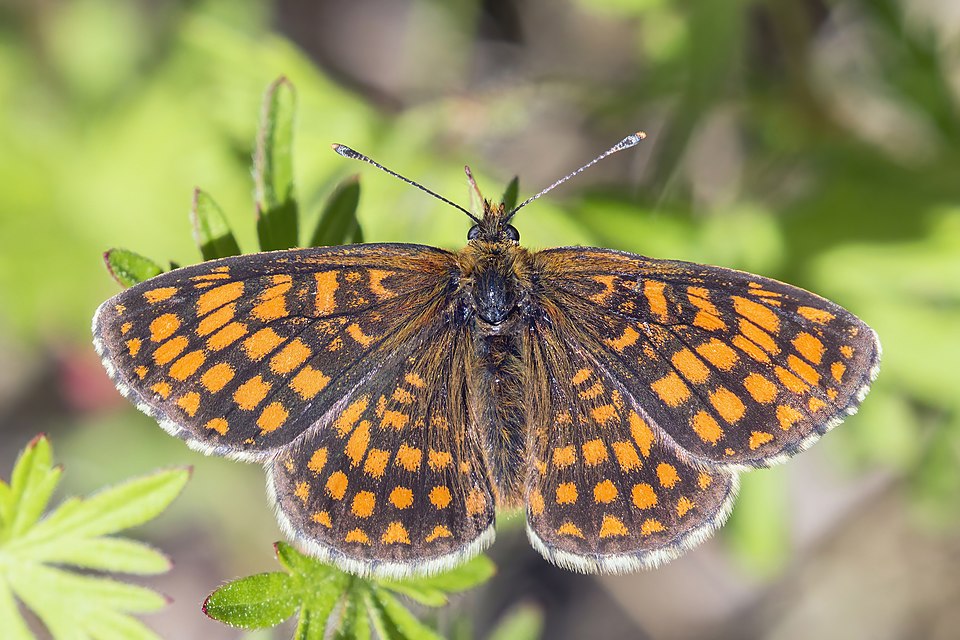
Heath Fritillary ( Melitaea athalia )
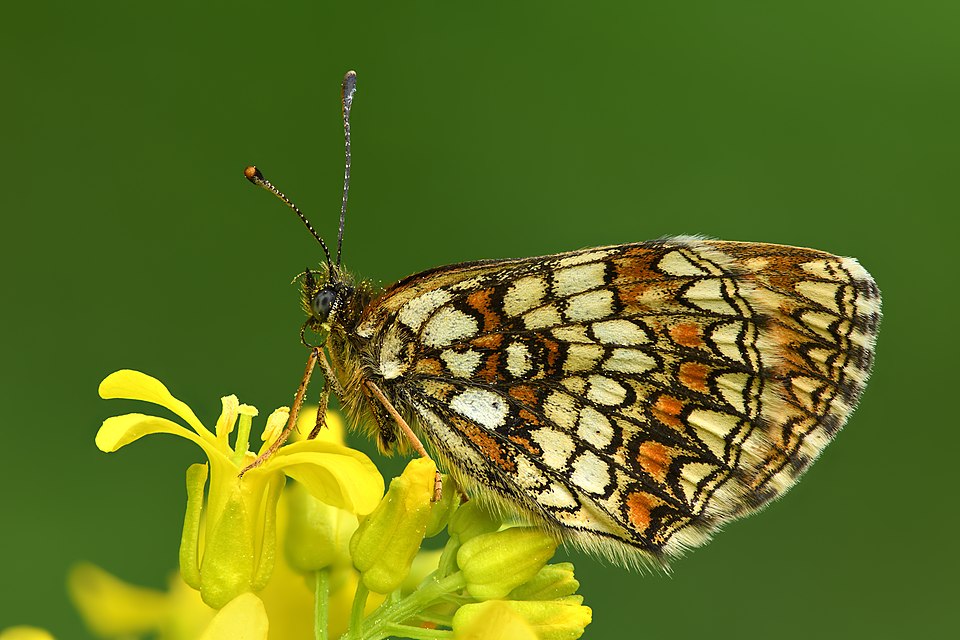
Melitaea athalia
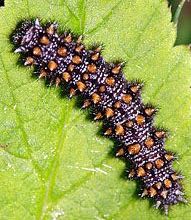
Heath Fritillary caterpillar