


A butterfly once considered extinct in Britain has made a remarkable return, with conservationists confirming that the large tortoiseshell is once again breeding in the wild.
The large tortoiseshell (Nymphalis polychloros) disappeared as a resident British species during the twentieth century and had been considered officially extinct for more than 30 years.
However, a growing number of sightings and evidence of successful breeding have now led Butterfly Conservation to recognise it as a resident species once again.
Recent sightings have been recorded across southern England, including Kent, Sussex, Hampshire, Dorset and Cornwall, as well as the Isle of Wight..
Caterpillars have also been discovered feeding in the wild, providing important evidence that the butterflies are successfully breeding rather than simply appearing as occasional seasonal visitors from continental Europe.
Closely related to the much more familiar small tortoiseshell, its larger cousin can be distinguished by its size and slightly different markings. Its caterpillars also have very
different habits.
Rather than feeding on nettles, they live communally on trees including
elm, willow, aspen and poplar.
The reasons behind the butterfly’s original disappearance remain uncertain. Changes to woodland habitat and the mass die-off of elm trees have both been considered possible factors, while Britain was also already at the northernmost fringes of its European
range.
In recent years, the large tortoiseshell has expanded in parts of continental Europe, raising the possibility that butterflies arriving naturally from across the Channel have begun recolonising southern Britain. Warmer conditions may also be making parts of the
country increasingly suitable.
Conservationists nevertheless remain cautious about declaring the butterfly fully re-established. Its British population is currently small, and continued successful breeding and monitoring will be needed before its long-term future is secure.
Nevertheless, its reappearance provides an encouraging example of how wildlife distributions can change over time.
For a species absent as a British resident for decades, the sight of large tortoiseshells breeding here once again represents a particularly welcome return.
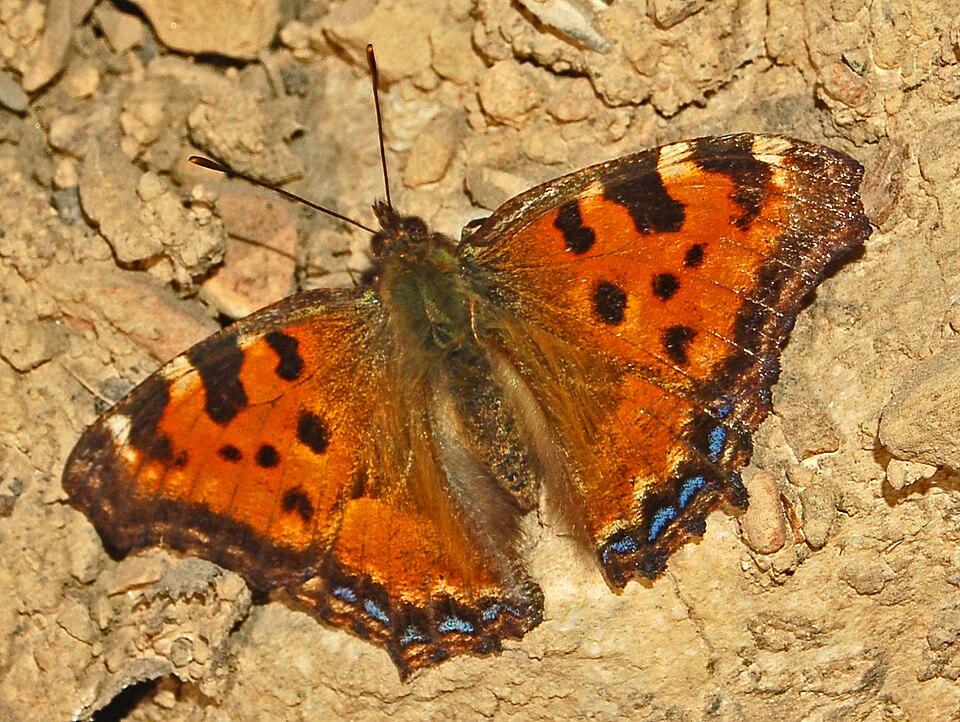
Nymphalis polychloros
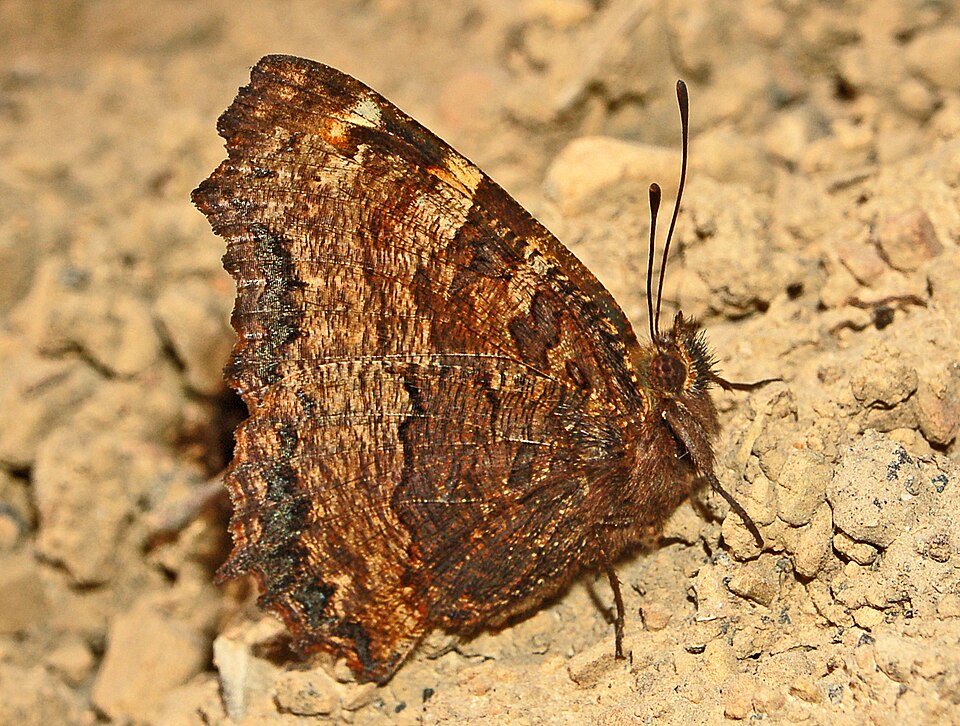
Underside
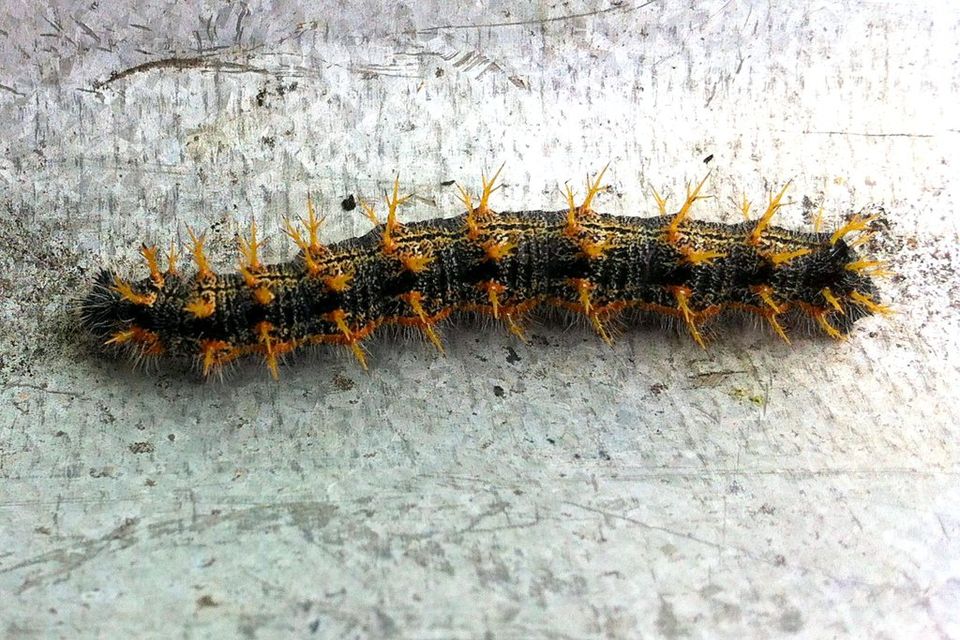
Caterpiller stage