


In the oak woods of Exmoor National Park, a native mustelid from Britain’s past has quietly returned. This autumn, conservationists released 19 pine martens into carefully chosen woodland sites across the park, the first time in more than a century that the elusive mammals have roamed here.
The project coordinated by the Two Moors Pine Marten Project and supported by the Wildlife Trusts, National Trust, and Exmoor National Park Authority, represents a highly significant species reintroduction. Funded by the National Lottery Heritage Fund, the scheme aims not only to restore a vanished predator, but to breathe new ecological life into the region’s fragmented woodlands.
“Seeing pine martens back on Exmoor after all these years is truly inspiring,” said Ian Braddick, Devon Wildlife Trust. “They’re a symbol of what we can achieve when people work together for nature rather than against it.”
Once widespread across Britain, pine martens were driven to near-extinction by persecution and habitat loss during the 19th and early 20th centuries. Today, small but stable populations survive in Scotland, parts of Wales, and pockets of northern England. The Exmoor release marks a major step in their southward return and, conservationists hope, the beginning of a wider recovery.
Each of the 19 martens (9 females and 10 males) was health-checked, tagged, and fitted with a small radio collar before being released in September. The animals, translocated from healthy Scottish populations, are now being tracked daily by local field officers and volunteers to ensure they adapt to their new environment. Early signs suggest several have already established territories.
Their presence could bring cascading ecological benefits. Pine martens are agile hunters that primarily feed on small mammals and birds, but they also prey on invasive grey squirrels, which have long outcompeted Britain’s native reds. Studies from Wales and Scotland suggest that re-established pine marten populations can reduce grey squirrel numbers significantly, creating conditions for red squirrels to return.
“This isn’t just about one species,” said Emily Reed, Exmoor National Park Authority. “It’s about restoring balance, healthier woodlands, natural pest control, and a landscape where native species can thrive again.”
Local reaction has been broadly positive, although not without caution. Some farmers have voiced concern about potential impacts on poultry or game birds, though project leaders emphasise that pine martens are shy, mostly nocturnal, and unlikely to trouble livestock. Public meetings and workshops have been held across Exmoor’s communities to explain the project and gather feedback.
Landowners have also played a key role, offering access to suitable woodlands and helping to monitor activity via camera traps. “It’s been a real community effort,” Reed added. “Everyone understands that the health of our countryside depends on the diversity of both people and wildlife.”
Beyond Exmoor, the project is being watched closely by conservationists across Britain. The reintroduction follows successful efforts in the Scottish Highlands and central Wales, where pine martens have re-established themselves naturally over the past two decades. If the Exmoor population breeds successfully, it could serve as a model for future rewilding in the South West.
The team plans to release a further group of pine martens in 2026, depending on monitoring results. For now, motion-triggered cameras and local volunteers are capturing glimpses of the animals as they explore their new territory.
“It’s proof,” said Braddick, “that even after a hundred years of absence, nature can find its way back, if we give it the space.”
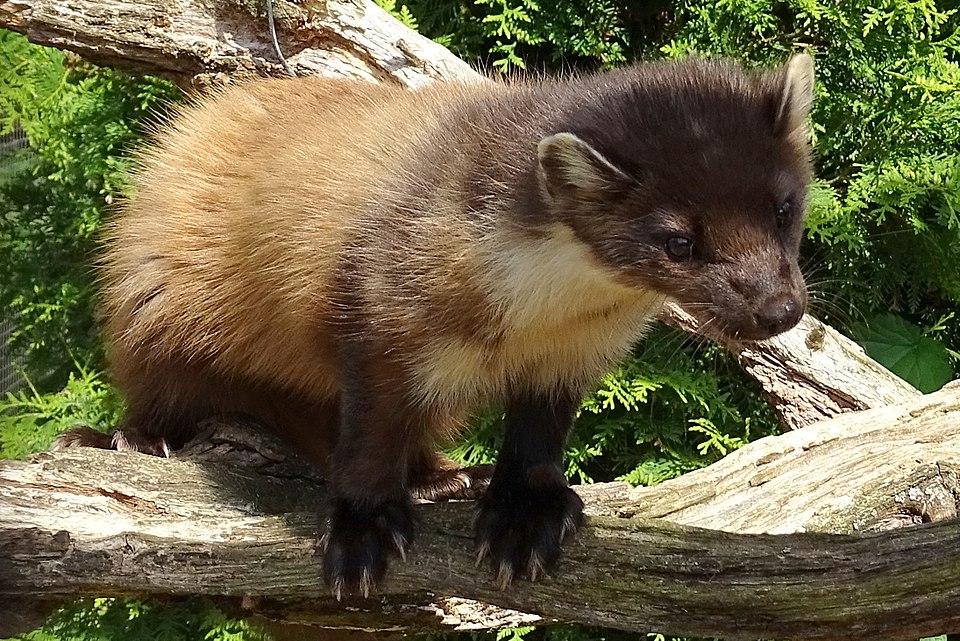
Pine Marten- British Wildlife Centre
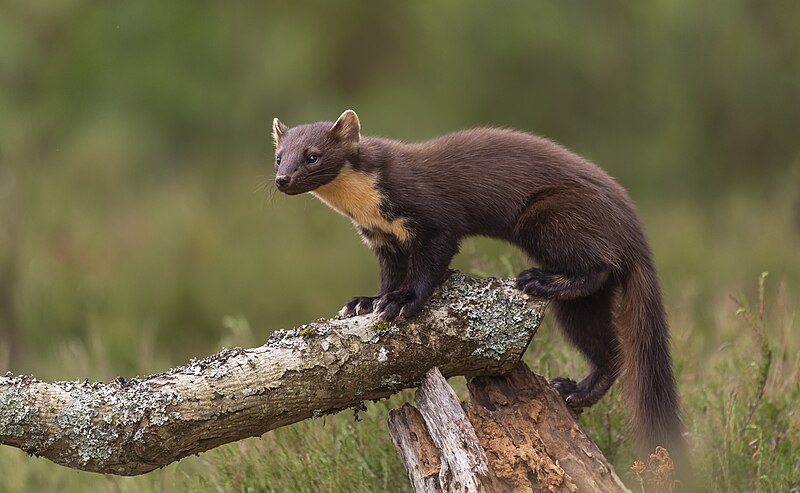
Pine Marten in Scotland
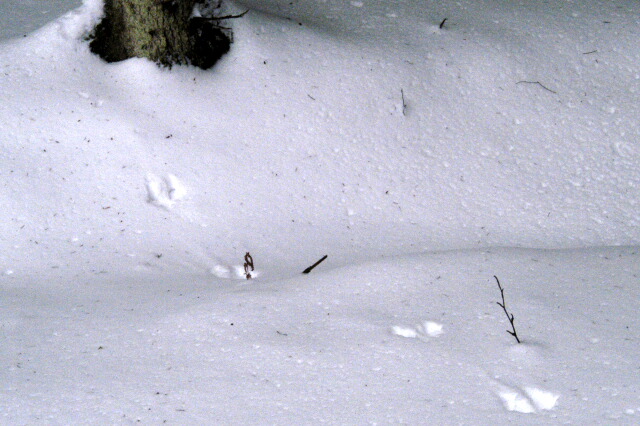
Pine Marten tracks