


Along the River Otter, the water no longer hurries. It gathers behind fallen branches and moves through willow and reed. What might appear untidy is the steady work of a native species returned after centuries of absence.
Beavers (Castor fiber), reintroduced to this catchment several years ago, are now demonstrably altering how the river functions. Monitoring data released over the past year by the River Otter Beaver Trial shows that their dams slow flows during heavy rainfall, lower downstream flood peaks, and create wetland habitats that support a wide range of species. What began as a closely watched trial is increasingly regarded as a practical example of nature-based flood management.
This comes at a time when England’s rivers are under growing pressure. Heavier rainfall, compacted agricultural land and extensively modified channels mean water now moves through catchments more quickly. Rapid flow increases erosion, overwhelms drainage systems, and raises flood risk further downstream. Conventional flood defences often reinforce these patterns. Beaver wetlands operate differently.
By building dams across smaller channels and drainage lines, beavers increase what hydrologists refer to as hydraulic roughness. Water is slowed, spread across adjacent land, and temporarily stored. During major rainfall events on the River Otter, this has led to measurable reductions in peak discharge, with some monitoring showing flood peaks downstream reduced by up to 30 percent.
Beaver dams are also permeable. Water passes through them gradually, allowing sediment and organic matter to settle rather than being carried onward. As river levels fall, stored water returns slowly to the channel, helping sustain flows during dry periods, an increasingly important role as summer droughts become more common.
Ecological changes follow quickly. Reduced flow encourages sediment to accumulate, reconnecting channels with surrounding land. Shallow ponds and wet margins provide breeding sites for amphibians and aquatic insects. Invertebrate surveys around beaver sites have recorded higher species richness, supporting birds, bats and fish. Fish benefit not only from deeper refuge pools but also from improved water conditions as nutrients and fine sediments are retained by wetland vegetation.
These outcomes are not uniform, and challenges remain. Some landowners along the Otter have experienced waterlogging, particularly on low-lying fields in winter. Concerns about crop loss, tree felling and management responsibilities persist. The trial has shown, however, that most impacts can be addressed rather than avoided entirely. Flow-control devices installed in selected dams allow water levels to be regulated while keeping structures in place.
Public attitudes appear to be shifting as understanding grows. Local surveys indicate rising support for beavers, particularly among younger residents who see them as part of a wider recovery of rivers and wetlands. Beaver sites have also become informal outdoor classrooms, supporting education, research and low-impact tourism.
Policy, by contrast, has moved more slowly. While beavers are protected in Scotland, England continues to manage them through limited licensing and local agreements. The lack of a clear national framework has created uncertainty for landowners and conservation groups alike, even as evidence of ecological and hydrological benefits continues to build.
Beavers are not a universal solution. They require space, oversight and cooperation across catchments. But evidence from the River Otter suggests they can play a meaningful role in restoring river processes, improving water quality and reducing flood risk at a time when conventional approaches are increasingly stretched.
As discussions continue about how best to manage England’s rivers, the beavers are already reshaping the system steadily, and in ways that science is now able to measure.
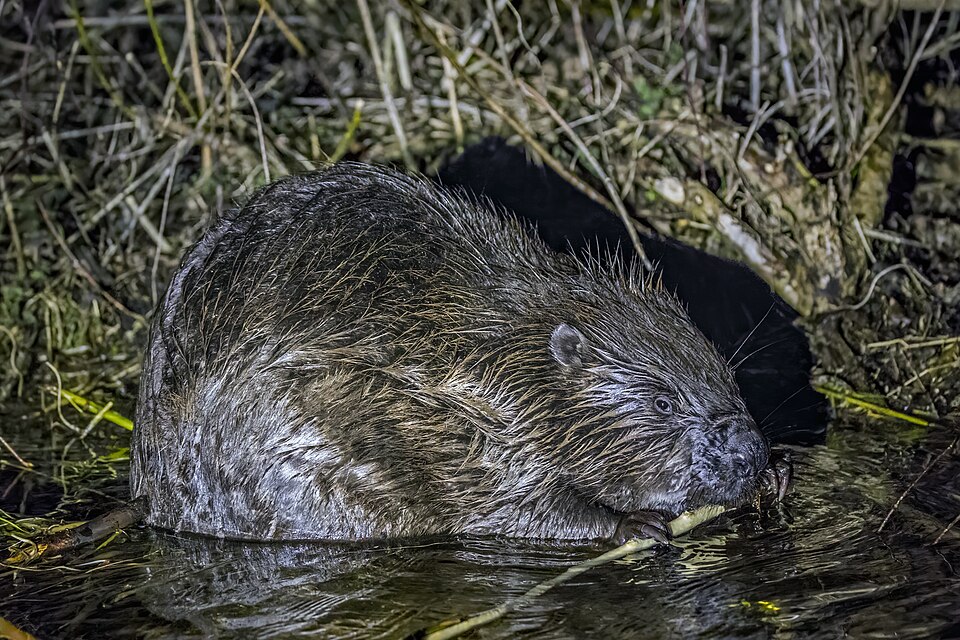
Eurasion beaver ( castor fiber )
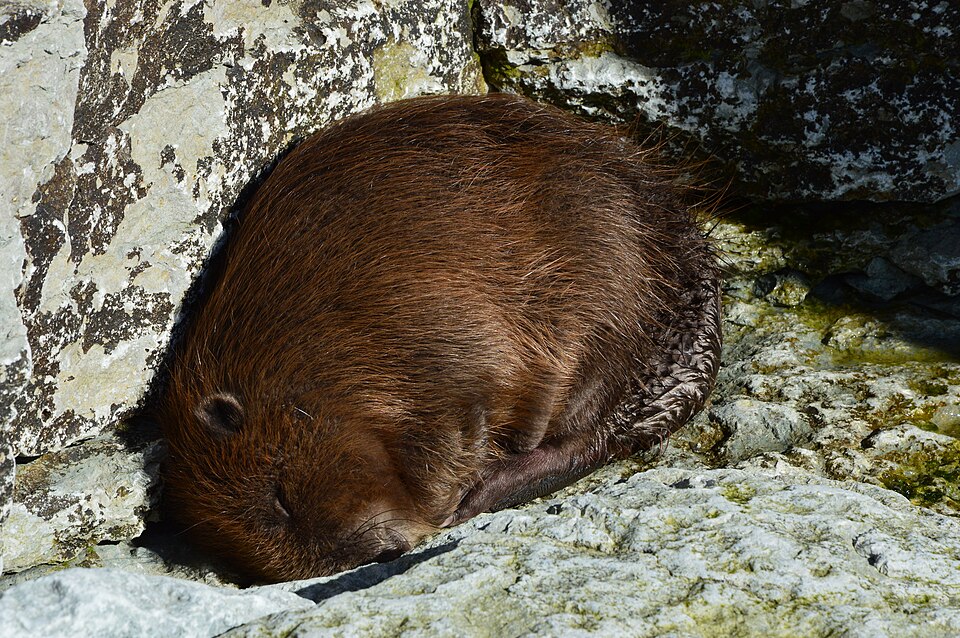
Sleeping beaver