


In early 2026, conservationists confirmed that the large tortoiseshell butterfly (Nymphalis polychloros), long thought lost as a breeding species in Britain, is once again establishing itself in the wild. Sightings have been recorded across southern England, including Kent, Sussex, Hampshire, Dorset, Cornwall and the Isle of Wight, with individuals appearing across successive seasons. What was once treated as a rare wanderer from the continent is now being recognised as a resident species again, bringing Britain’s total to sixty native butterflies.
The large tortoiseshell was once part of the life of these islands, moving through wood edges and open glades in a way that would have seemed ordinary, even if seldom remarked upon. Its decline took hold across the nineteenth and early twentieth centuries, until by the mid twentieth century it had slipped away as a breeding species. There was no single cause. The loss of elm through disease removed one of its chief supports, while changes in land use and the steady breaking up of habitat narrowed what remained.
Its passing was quiet. There was no clear end to it, no moment that could be pointed to. It faded, year by year, until it was no longer looked for, and then no longer expected.
Its return has followed a similar path.
In recent years, populations on the continent have grown stronger, particularly in France and the Netherlands, and more individuals have crossed the Channel during favourable conditions. Warmer seasons have lengthened the time in which butterflies can feed and breed, allowing some species to move north into places they had once lost.
The large tortoiseshell has not been brought back by design. It has come under its own power.
The clearest sign of this change lies in what has been found since 2020. Caterpillars have been recorded feeding on elm, willow, aspen and poplar in the wild, showing that the butterfly is completing its full life cycle here once again. That is the difference. A migrant may arrive and vanish again. A breeding species, even a small one, has begun to take hold.
The large tortoiseshell keeps to the edges. It favours the still warmth of tree trunks, the slow seep of sap, the sweetness of fallen fruit. Its young depend on trees standing close enough together to hold a living thread across the land. Such threads are easily broken. In some places, it seems they have not been broken entirely.
It would be wrong to call this a full recovery. The numbers are small. Their hold is not yet secure. The pressures that drove the species away have not disappeared, and much of the land remains divided and thinned.
Across Britain, the wider picture remains one of decline. Many insect species continue to diminish in both number and range, often without notice. Against that, the return of a butterfly long gone sets a quieter note. It does not change the direction of travel, but it does show that the direction is not fixed in every place.
There is, in the living world, a kind of endurance that is easy to overlook. Not strong in every place, not certain, but present. Given the right conditions, and a little space, it can begin again.
Now, in some quiet corners of the south, where light gathers along the edges of woodland and the air holds its warmth a while longer, something moves that had long been missing. It is easy to overlook. A brief flicker, a passing shape, gone almost as soon as it is seen.
But it is there.
And that is enough to suggest that the land is not entirely closed to its return.
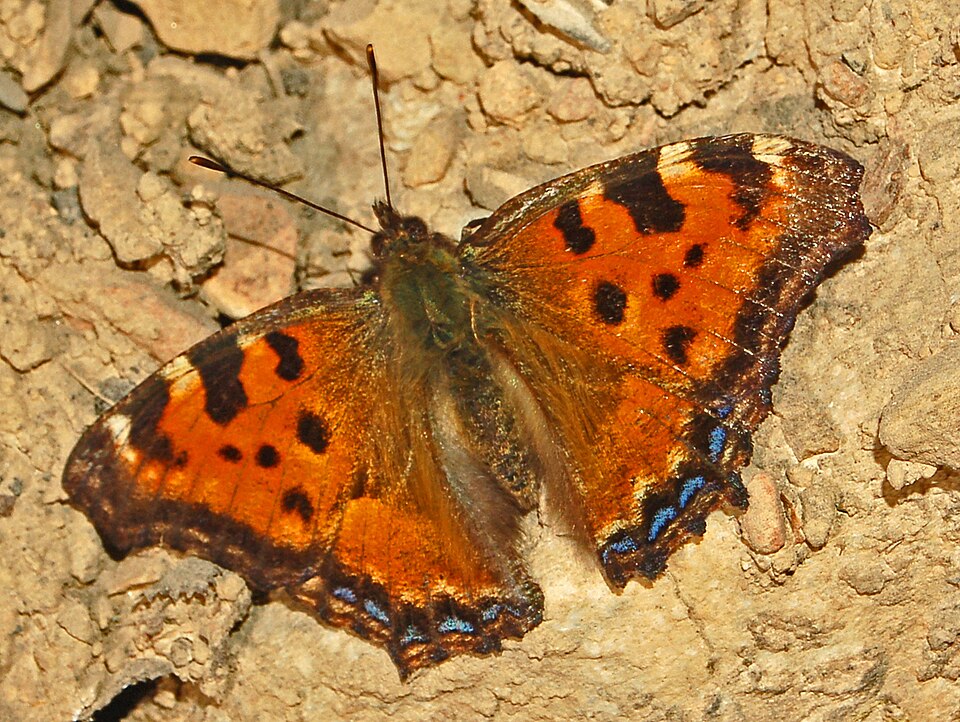
Upperside of Nymphalis polychoros
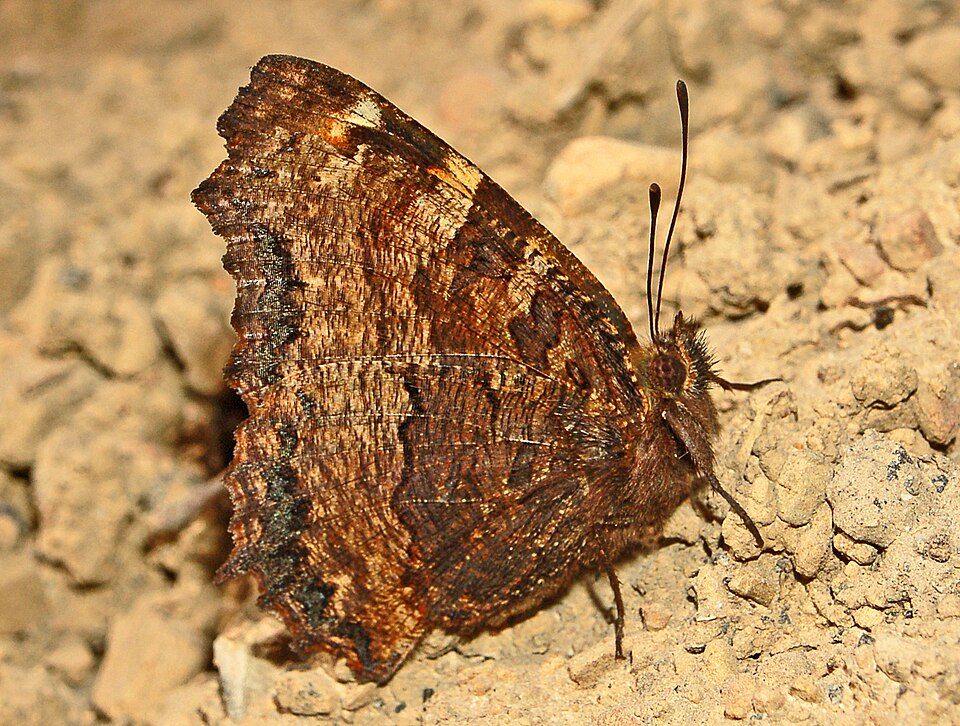
Underside
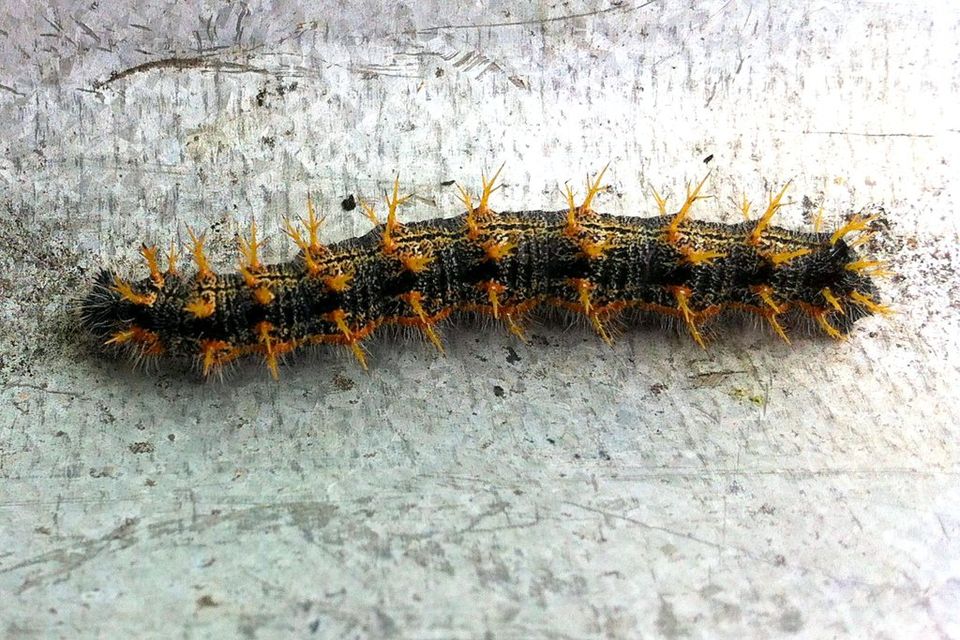
Caterpillar