


Two years after the senseless and illegal felling of the iconic Sycamore Gap tree at Hadrian’s Wall, a public art commission has been launched by the National Trust. The initiative hopes that the remaining preserved timber will be granted a symbolic second lease of life. Artists, designers and communities are being encouraged to propose ideas for a lasting installation that reflects upon our spiritual connection with it and the grief its loss caused.
Also known as the Robin Hood tree, it was one of the most photographed in the country before being cut down in 2023, leading to a public outpour of sorrow. Believed to be as much as one hundred and fifty years old, it stood at the base of a dip in the Roman wall and its outline had become recognisable from postcards, art pieces and often set the backdrop of ceremonies such as weddings.
Its sudden absence and sight of the lonely remaining raw stump has left a scar on the landscape. The British public have laid flowers and tributes, and with the passing of time, small shoots have begun to spring from the remains.
Earlier this year two men were convicted of the illegal felling and sentenced to 4 years 3 months respectively. Their motives remain unclear though are allegedly tied to a local dispute.
From 13th Oct. to 17th Nov. this year, artists and organisations are invited to submit ideas for the installation of the remaining wood. A five-proposal shortlist will be drawn with each set to receive £5,000 with the final chosen project to be announced early next year. £200,000 has been set aside for the final design.
The tree’s remains have been preserved with a number of fragments on display at local visitor centres. Forty nine saplings grown from cuttings have been distributed to local schools and community groups.
“The Sycamore Gap tree meant so much to people, locally and nationally,” said Ella Morrison, head of National Trust heritage programmes. “This commission is about channeling that emotion into something creative that speaks to resilience, loss and renewal.”
Despite standing within a National Park and next to a UNESCO World Heritage site, the sycamore had little in the way of legal protection. Conservationists argue that the incident highlights a wider weakness in safeguarding heritage trees, many of which hold deep cultural as well as ecological significance. “It was a cultural landmark as much as a natural one,” said Dr Isla Ham, a Cumbria-based cultural arborist. “If anything good comes out of this, it will be a broader recognition of trees as heritage assets – not just for their age, but for their place in memory and identity.”
The announcement arrives against a backdrop of wider challenges facing Britain’s woodlands. Ash dieback continues to decimate hedgerows and woodlands, while pests and climate change are reshaping forests across the country. Government targets for tree planting remain behind schedule, and conservation groups warn that ancient woodland is being lost faster than it is being restored. The Woodland Trust is due to release its State of the UK’s Woods and Trees report later this year, with early indications that it will underline the urgency of protecting existing habitats while encouraging new planting.
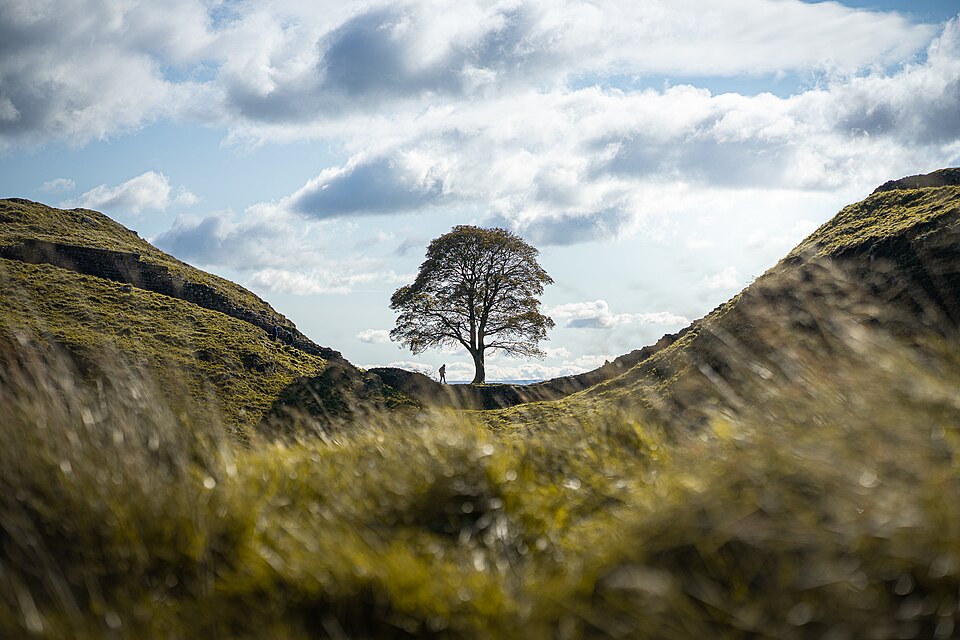
Sycamore Gap
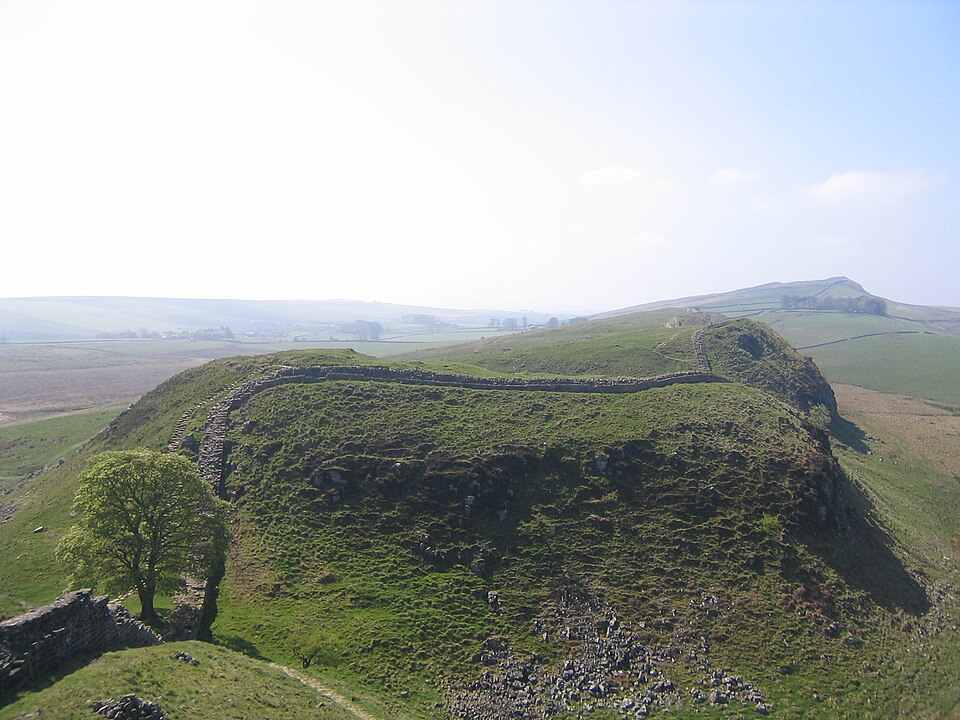
The tree nested between gaps of Hadrian`s Wall just west of Milecastle
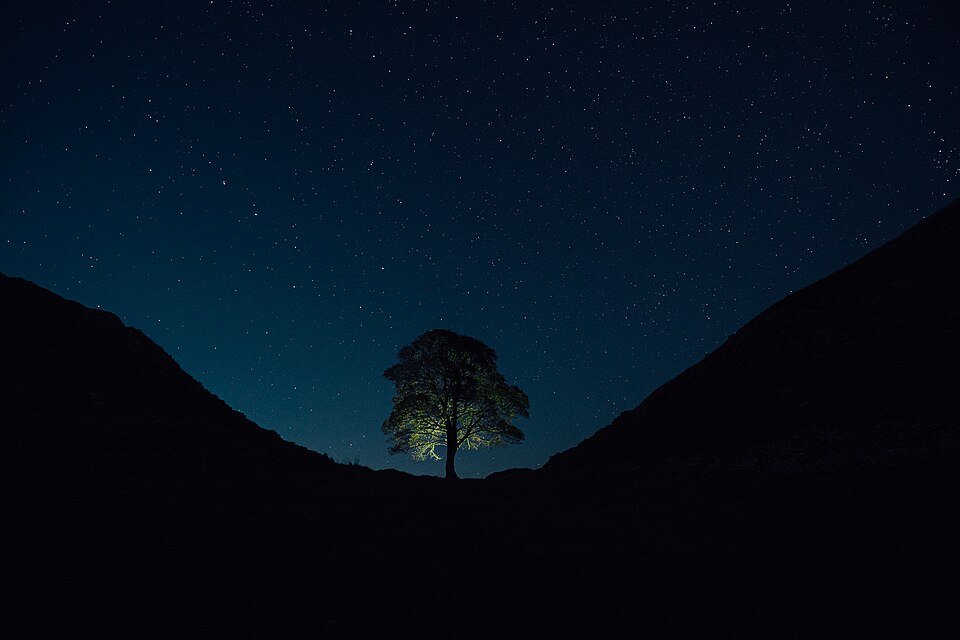
Sycamore Gap Tree by night