


For generations, the skies over southern England have been missing one of their greatest native birds.
The white-tailed eagle,(Haliaeetus albicilla) with broad wings, pale head and heavy, steady flight, is Britain’s largest bird of prey; a creature of sea cliffs, estuaries, rivers and open country. Once, it would have been a familiar presence across much of these islands. Then, through persecution and the long narrowing of wild places, it vanished as a breeding bird from England.
Now its return is gathering strength.
Natural England has issued a licence allowing up to twenty white-tailed eagles to be released in Exmoor National Park over the next three years. The work forms the next stage of the southern England reintroduction project led by Forestry England and the Roy Dennis Wildlife Foundation, following releases on the Isle of Wight that began in 2019.
Those earlier releases have already shown what patience can do. Young birds brought from healthy Scottish populations have explored widely across southern England, their journeys followed by satellite tags. Some have formed pairs. Since then, chicks have been raised in the wild again, marking the first successful breeding of the species in England for more than 240 years.
Exmoor has been chosen not by sentiment alone, but because the birds themselves have shown interest in the region. Tracking data from released eagles has revealed repeated visits to the area, where wooded valleys, open moorland and nearby coast provide the varied country these great birds require.
The return of a species like this is never merely ornamental. White-tailed eagles are part of the living order of a landscape. They feed largely on fish, waterbirds and carrion, helping to return nutrients through the food web and binding land, river and sea together. Their presence also tells us something about scale. A countryside able to hold such a bird must have space, prey, quiet corners and tolerance.
There will, of course, be care needed. Farmers and local communities must be listened to, and the project will require monitoring, evidence and trust. But this is how restoration should proceed: not with haste, but with steadiness.
For most people in England, the sight of a white-tailed eagle has belonged to history, or to the far north and west. Soon, over Exmoor’s wooded combes and high open ground, that may begin to change.
A great bird is returning.
And with it, a little of the old wild sky.
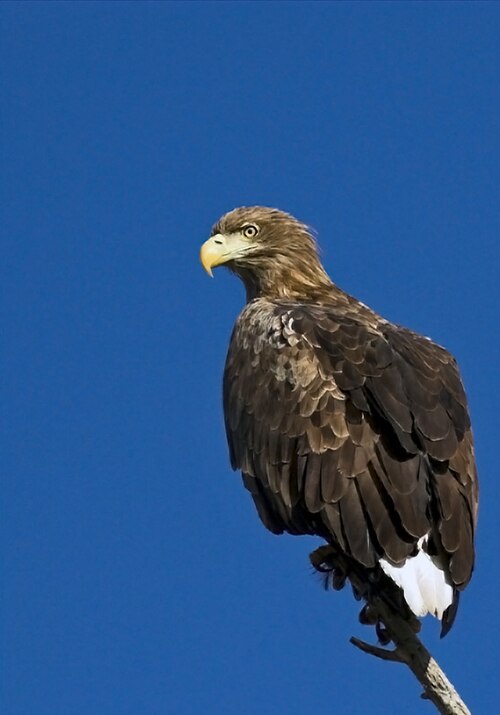
White-tailed eagle (Haliaeetus albicilla)
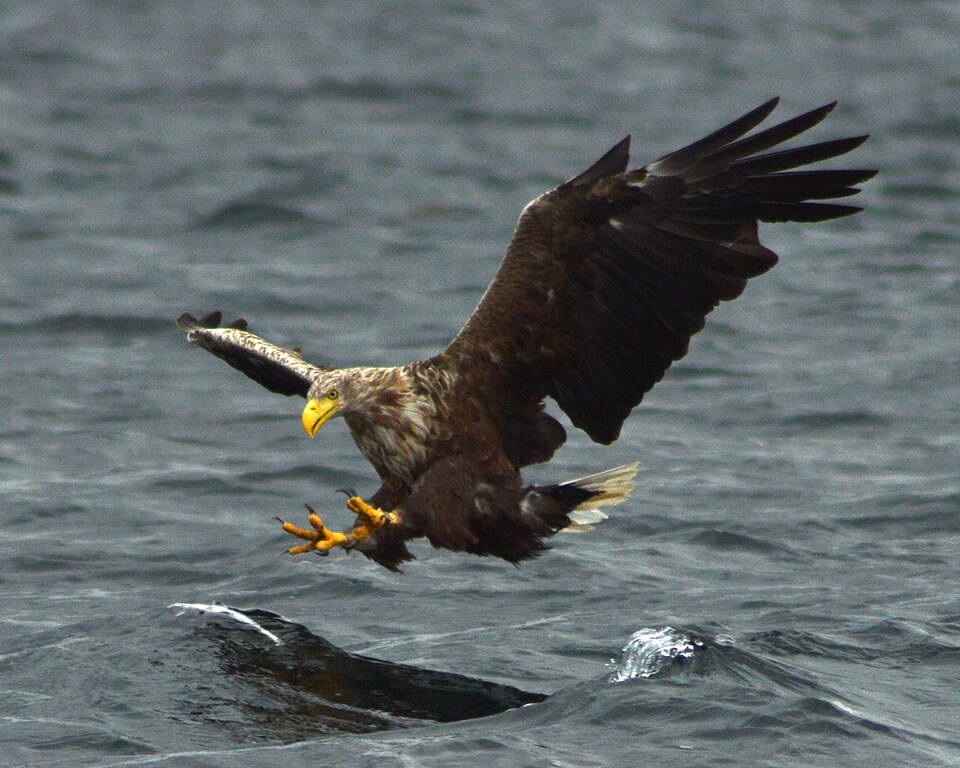
Hunting a fish in Scotland
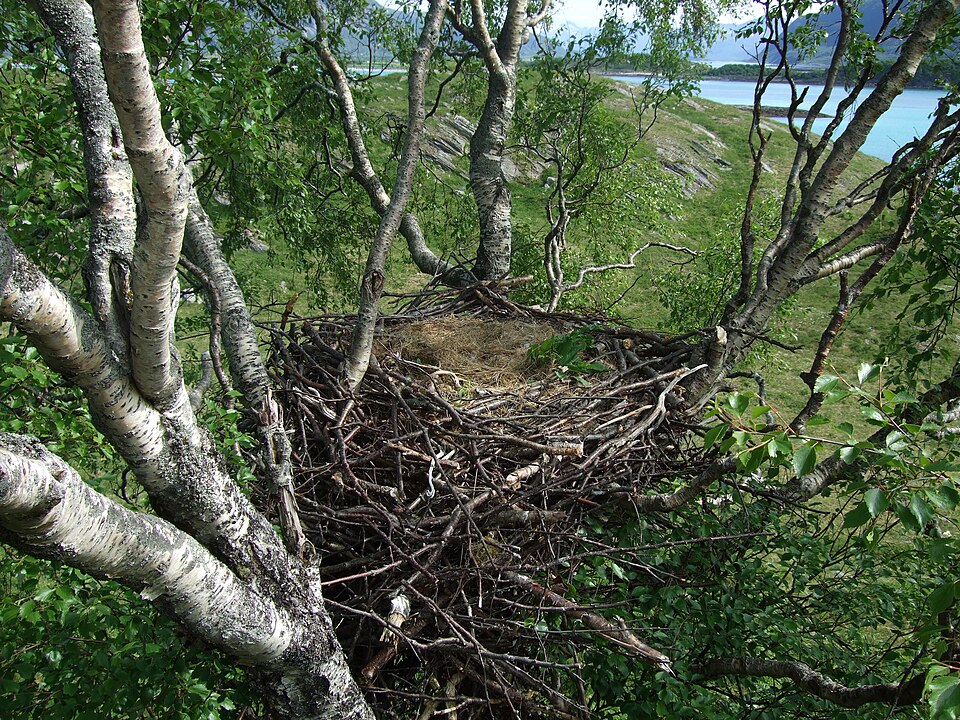
An empty nest