
Great Bustard Group
- Click here for satellite location
- www.greatbustard.org
- Share this project


The Great Bustard Group (GBG) was formed in 1997 with the aim of reintroducing the Great Bustard to the UK.
The Great Bustard became extinct here in the middle of the 19th century, largely due to the activities of ornithologists wanting specimens for their collections.
The first Great Bustards were released in 2004.
There are now three established sub populations across south Wiltshire and work is underway in creating a fourth. The total population in spring 2026 was close to 55 birds.
The population is self-sustaining and slowly increasing.
Headstarting is a way to accelerate population growth and to spread the breeding range.
The Great Bustard is the only bird in the UK which is classed as being Globally Endangered (IUCN and Birdlife).
The GBG conservation actions may be split into six groups:
Provision of habitat – the lease/rent of over 30 hectares at 5 locations which are managed as chick rearing plots and work with farms to modify existing habitat and schemes to benefit Great Bustards
Protection of nests – particularly from silage cutting, which endangers females.
Monitoring and evaluation – annual census, breeding success and population recruitment
Research to facilitate better conservation actions – including development of agri-enviroment schemes.
Headstarting chicks and release to increase breeding range.
Promotion of the Great Bustard and its conservation benefits – including events, hosting visitors, Newsletters, and social media.
Overview of Headstarting
The headstarting takes place at the GBG facility on Salisbury Plain. The base is on tenanted MOD farmland near Enford in the Avon Valley, Wiltshire.
The eggs are taken under the provisions of a licence issued by Natural England to rescue eggs from nests in endangered or vulnerable locations or situations. They are moved in transport incubators to the Cotswold Wildlife Park where the incubation is continued. As soon as the chicks hatch they are collected in heated transport boxes and brought to the GBG facility at Enford, Salisbury Plain.
The chicks are reared until they are fully feathered and able to withstand all weathers and are then given a thorough health check ensuring they are fit for release and free from an infectious or notifiable disease.
As well as a physical examination the checks include the taking of blood and faecal samples which are submitted to specialist laboratories for virology, bacterial and parasitology.
At this stage the birds are all micro chipped by the vet and then go to the aviaries at the release site on the edges of Salisbury Plain.
A soft release process is then undertaken with the birds being fully independent by the end of September. This involves staff wearing the distinctive costume taking the birds out for increasing periods of time.
By September the birds are out for several hours and at the end of the month do not wish to return to the aviaries and in effect have then released themselves.
Restore Our Planet are pleased to be supporting this exciting initiative.
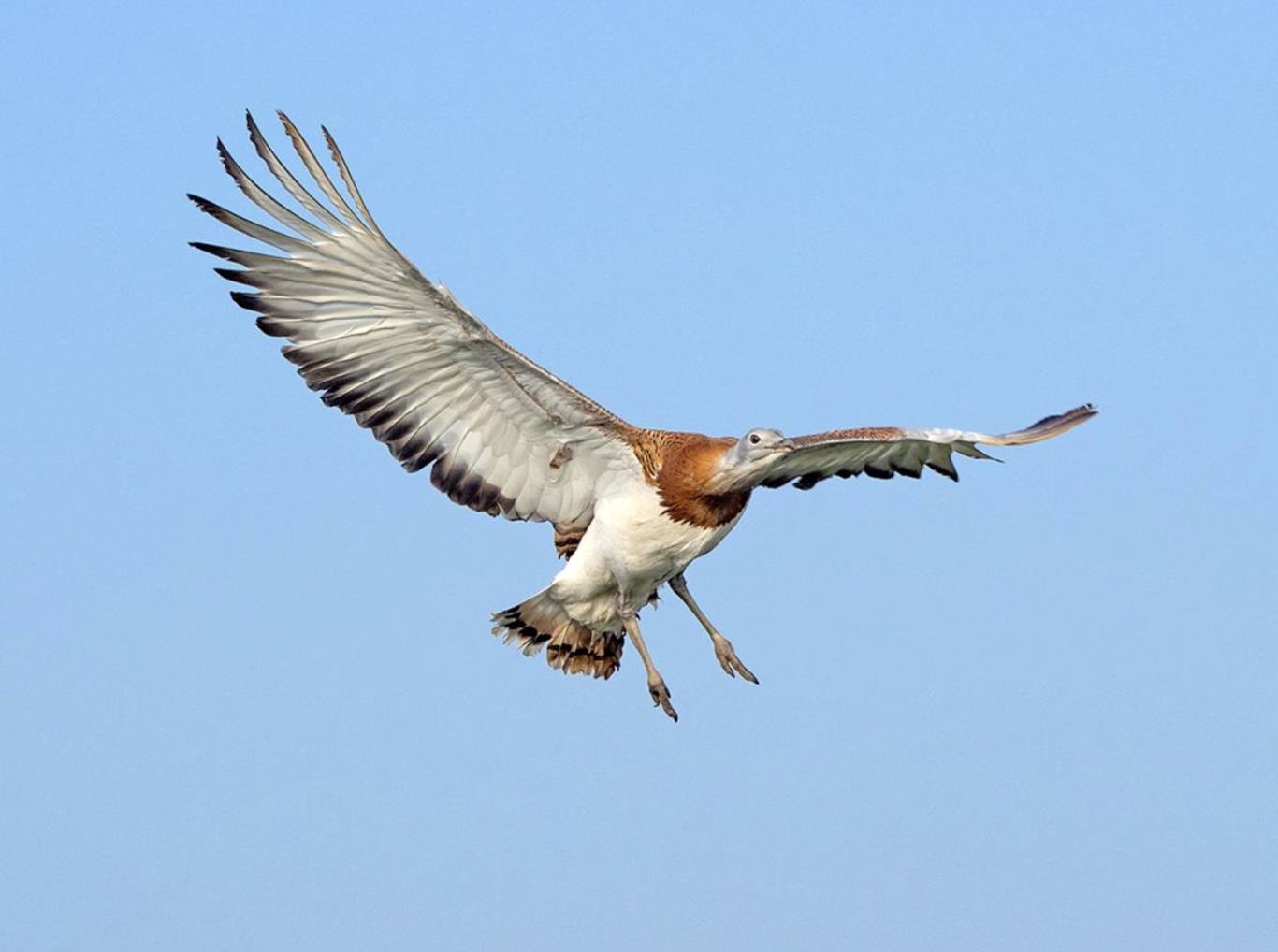
Male Bustard coming in to land-Great Bustard Group
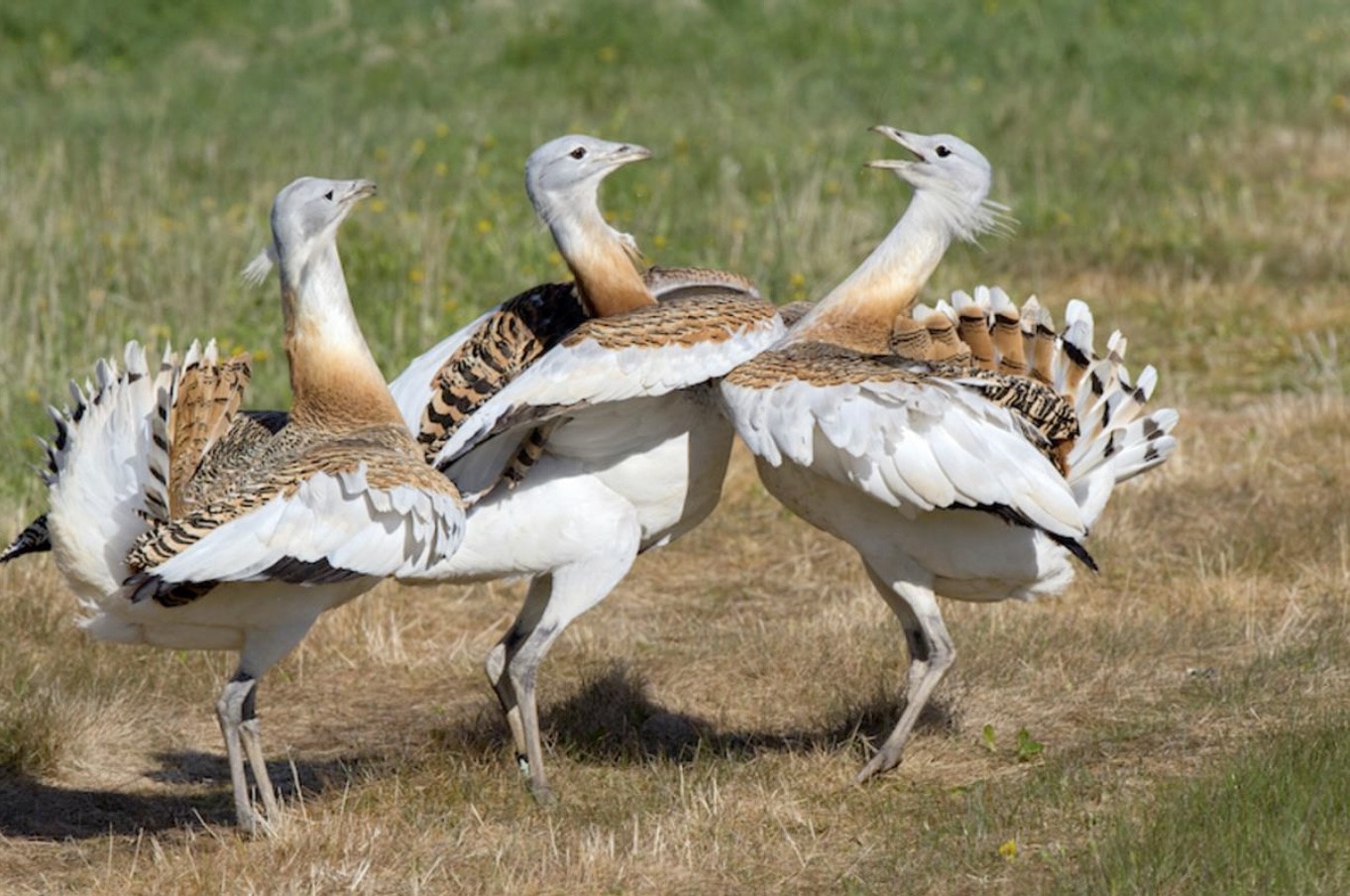
Three Male Great Bustards
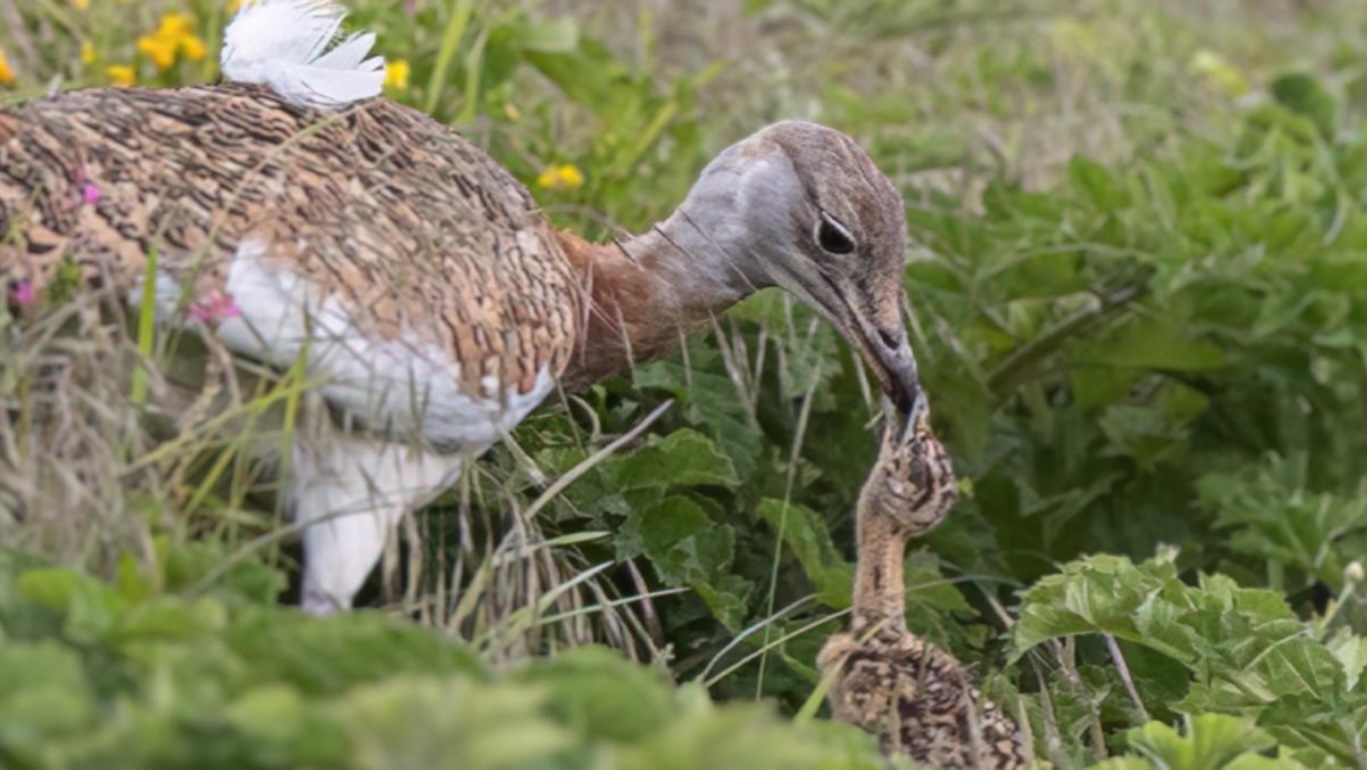
Female Great Bustard feeding her chick